
Optimizing Natural Gas Trading with Informatics Algorithms
9/1/20258 min read
Introduction to Natural Gas Trading
Natural gas is a critical commodity in the global energy market, serving as a primary source of energy for residential heating, electricity generation, and industrial applications. With its growing use as a cleaner alternative to coal and oil, natural gas has become increasingly significant in achieving energy transition goals. Its chemical properties, primarily methane, make it highly efficient and versatile, resulting in a rising demand that has ultimately redefined market dynamics regarding availability and pricing.
The trading of natural gas involves the buying and selling of natural gas contracts on various exchanges, where market participants, including producers, utilities, and speculators, interface to optimize their financial positions. Understanding the fundamental principles of natural gas trading is crucial for participants aiming to navigate this complex market. Traders analyze factors such as supply and demand, weather forecasts, geopolitical developments, and infrastructure limitations to forecast price movements and make informed trading decisions.
Algorithmic trading has emerged as a transformative practice in the natural gas sector, allowing for more sophisticated decision-making processes. By employing algorithms to automate trading strategies, market participants can swiftly analyze vast amounts of data, identify trading signals, and execute trades with remarkable speed, resulting in improved efficiency and potentially higher profitability. This technology enhances the accuracy of forecasting price trends and reduces human error, thus optimizing trading operations in the volatile natural gas market.
As we delve deeper into the role of informatics algorithms within natural gas trading, it becomes imperative to comprehend their function in enhancing trading strategies and overall market performance. Understanding these algorithms allows traders to better anticipate market fluctuations and leverage opportunities in an increasingly competitive landscape.
The Role of Informatics Algorithms in Trading
Informatics algorithms are structured sets of logical rules or processes designed for data analysis, decision-making, and automation, specifically within the realm of financial transactions. In the context of trading, these algorithms harness vast amounts of data to execute trades more efficiently than human traders could achieve. By analyzing market conditions, identifying patterns, and processing real-time information, informatics algorithms can facilitate quicker responses to dynamic market conditions, particularly in the highly volatile natural gas sector.
One of the primary advantages of utilizing informatics algorithms in trading is improved accuracy. In a market characterized by constant fluctuations, traders must often make split-second decisions based on complex data sets. Algorithms can reduce the risk of human error by consistently following predetermined trading strategies and by avoiding emotional biases that may affect decision-making. This consistency enables traders to better capitalize on market movements in natural gas trading, where timing is critical.
Speed is another significant benefit that informatics algorithms provide. With the capability to execute trades in milliseconds, these algorithms are essential in a high-frequency trading environment. This rapid execution allows traders to take advantage of fleeting price discrepancies that may last only seconds in the natural gas market, thus maximizing profit opportunities. Moreover, the efficiency introduced by these algorithms minimizes transaction costs and improves overall trade execution quality.
Various types of algorithms are employed in commodity trading, including statistical arbitrage, trend-following, and execution algorithms. Each type serves distinct purposes, such as capturing short-term price movements or ensuring efficient order execution without significantly impacting the market. By incorporating these algorithms into their trading strategies, traders focusing on natural gas can enhance their operational efficiency and solidify their competitive edge in a complex marketplace.
Longs vs. Shorts in Natural Gas Trading
In the context of natural gas trading, the dichotomy between long and short positions significantly influences trading strategies and overall market performance. A long position is initiated when a trader anticipates increasing prices, while a short position is taken when a decline in prices is expected. This section focuses on executing long trades exclusively for natural gas, analyzing the performance outcomes compared to short strategies.
The rationale for concentrating on long trades arises from prevailing market trends and conditions. Historically, natural gas prices exhibit considerable volatility, influenced by factors such as seasonal demand fluctuations, geopolitical developments, and shifts in energy policies. During periods of notable demand, particularly during winter months, the market has shown a tendency towards upward price movement. This inherent upward bias reinforces the decision to favor long positions, capitalizing on anticipated price increases rather than exposing the portfolio to the risks associated with short-selling.
Key findings indicate that long trades, when executed with the aid of informatics algorithms, tend to yield more favorable results during bullish market phases. Analyzing historical trading data, it becomes evident that successful long trades significantly outweigh the risks associated with short positions, particularly in an environment characterized by upward price momentum. Moreover, algorithm-driven trading allows for enhanced precision in entry and exit points, further bolstering the efficacy of long strategies.
In summary, the comprehensive review of market behavior and performance metrics supports the focus on long trades within natural gas trading. By strategically navigating the inherent volatility and leveraging analytical insights, traders can optimize their investment outcomes, making a strong case for the long-only approach in this dynamic sector of the energy market.
Performance Metrics Overview
To assess the effectiveness of natural gas trading strategies developed through informatics algorithms, several key performance metrics are utilized. Each of these metrics provides insights into different aspects of trading performance, enabling traders to evaluate and refine their approaches to maximize success.
One of the foremost indicators is returns, which reflects the profit or loss relative to the initial investment. High returns signify a favorable performance, while consistently low or negative returns may prompt a reevaluation of the strategy. Next is the number of trades, which reveals the level of activity in the trading strategy. A balanced number of trades can indicate a well-optimized algorithm—avoiding overtrading while capitalizing on profitable opportunities.
The maximum drawdown is another critical metric, representing the largest peak-to-trough decline in portfolio value. It helps traders understand the risk associated with their strategy; a lower maximum drawdown suggests a more stable trading performance. Additionally, slippage, which measures the difference between expected trade prices and actual execution prices, can significantly impact profitability. Minimizing slippage is essential for a successful trading strategy, as it can erode gains.
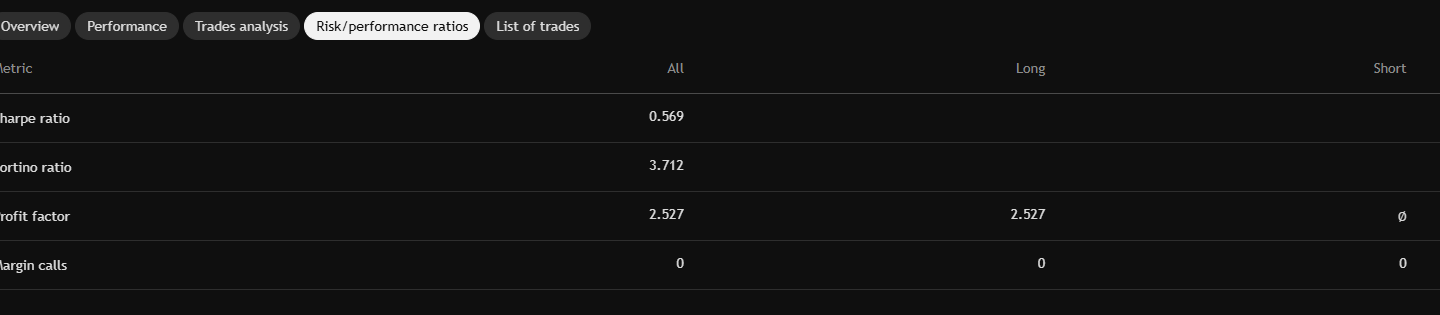
Profitability, expressed as a percentage of total trades that are profitable, offers a straightforward view of how often successful trades occur. Furthermore, the Sharpe ratio evaluates risk-adjusted returns, indicating how much excess return is achieved per unit of risk. A higher Sharpe ratio is desirable, as it implies better risk management alongside returns. The Sortino ratio varies slightly by focusing solely on downside risk, which is particularly relevant in volatile markets like natural gas trading.
Lastly, the profit factor, quantifying the ratio of gross profits to gross losses, provides a comprehensive view of a trading strategy's viability. A profit factor greater than one indicates a profitable strategy, guiding traders in assessing the soundness of their trading algorithm. By systematically analyzing these metrics, traders can optimize their natural gas trading approaches for enhanced performance.
Analysis of Trading Performance in August
In the arena of natural gas trading, the month of August has proven to be particularly fruitful, yielding a return of 3.10%. This performance underscores the effectiveness of employing informatics algorithms to optimize trading strategies in a market characterized by volatility. A total of 61 trades were executed during this period, reflecting a systematic approach to capitalizing on market fluctuations.
Trade execution plays a vital role in performance outcomes. High-frequency trading algorithms facilitated timely entries and exits, allowing traders to take advantage of price shifts within the natural gas market. The ability to execute trades swiftly has been bolstered by advancements in technology, enabling traders to react to market conditions instantaneously. In August, the algorithms adapted efficiently to various market scenarios, which was integral to achieving the notable profitability rate.
Market conditions during this month were influenced by several external factors, including fluctuations in supply and demand, geopolitical tensions, and seasonal variations in consumption. The algorithms employed not only tracked these dynamics but also incorporated historical data to forecast potential price movements. Understanding these factors allowed traders to make informed decisions, ultimately contributing to the overall successful trading performance in August.
Moreover, the significance of achieving a 3.10% return cannot be overstated. This level of profitability indicates a healthy trading environment and demonstrates the potential effectiveness of informatics algorithms in decision-making processes. By analyzing trading performance, stakeholders in natural gas can refine strategies and enhance future trading activities. The analysis of August’s trading results provides a foundation for continuous improvement, ensuring that the strategies remain aligned with market demands and capitalize on emerging trends.
Understanding Drawdown and Risk Management
In the realm of natural gas trading, understanding drawdown and risk management is essential for traders seeking to optimize their strategies. Drawdown, defined as the peak-to-trough decline during a specific period, is a critical measure of the potential losses that an investor could face. In the context of natural gas, a maximum drawdown of 0.37% suggests that the trading algorithm must be finely tuned to navigate market fluctuations effectively.
Effective risk management is a multifaceted approach that involves setting precise parameters, such as stop-loss orders, to guard against unexpected movements in the market. Traders can utilize algorithms to automatically adjust their positions based on market signals, minimizing the potential impact of drawdown. Additionally, diversification across various natural gas derivatives can reduce the overall risk profile. By spreading investments, traders can mitigate the risks associated with a single asset’s price movements.
Implementing best practices in risk management is paramount for algorithmic trading strategies. First, traders should conduct a thorough risk assessment prior to making trades. This involves identifying market conditions that may lead to increased volatility in natural gas prices. By utilizing historical data and predictive analytics, traders can establish risk thresholds and develop contingency plans to address adverse movements.
Furthermore, it is prudent to regularly backtest trading algorithms under different market conditions to ascertain their robustness. This practice not only helps in refining the strategies but also enhances understanding of the potential drawdowns that could occur. By employing risk management strategies that include setting realistic profit expectations and adhering to disciplined trading practices, traders can navigate the complexities of natural gas trading effectively, aiming to maximize returns while minimizing risk exposure.
Future Prospects and Conclusion
As the landscape of natural gas trading continues to evolve, the integration of informatics algorithms presents significant opportunities for traders seeking to enhance their strategies. The future prospects of this field are bolstered by ongoing advancements in technology and analytics, which allow for a deeper understanding of market dynamics. The ability to analyze large datasets in real-time transforms the way traders approach decision-making, ultimately leading to more informed trading strategies. The use of data-driven insights can improve forecasting accuracy, enabling traders to anticipate market movements with greater precision.
One of the key trends on the horizon is the growing adoption of machine learning and artificial intelligence within trading platforms. These technologies can identify patterns in market behavior that may go unnoticed by human analysts, providing a competitive edge. Furthermore, as global energy markets become more interconnected, the implementation of algorithms that can process and respond to cross-market signals will be increasingly vital. This is particularly relevant for natural gas, where shifts in supply and demand can have immediate impacts across various markets.
Moreover, the rising importance of sustainability and environmental concerns in energy trading necessitates that informatics algorithms continuously adapt to changing regulations and market sentiments. Traders who leverage advanced analytical tools can not only optimize their strategies but also align with the broader transition towards renewable energy sources, catering to a growing market demand for environmentally responsible trading practices.
In summary, as the natural gas sector progresses, traders are encouraged to embrace the capabilities of informatics algorithms. By adopting algorithmic trading strategies, they stand to gain a more nuanced understanding of market trends, improve their trading outcomes, and position themselves at the forefront of innovation in this dynamic industry. The future of natural gas trading is bright, with informatics playing a pivotal role in shaping its trajectory.